

 Deutsch
  Français
  Türkçe
  العربية
What is Positive Birth Journey?
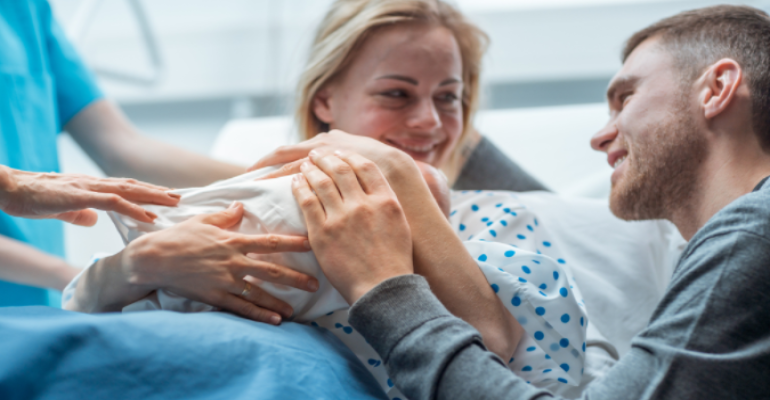
With physical and mental preparation, a birth journey where the joy of birth is experienced, and where mother-baby bonding occurs through skin-to-skin contact in the first minutes, regardless of the birth method, and where positive emotions accompany the birth journey, is what we call a positive birth journey.
The moment of birth is a very special moment. Both the mother and the baby will remember this moment for a lifetime. Therefore, at the time of birth, the entire service should be planned according to what the mother and baby need. We want the mother to remember the moment of birth with a smile on her face, even a day, a week, a year, or ten years later, and approach her baby with those positive emotions, connecting with confidence.
“ ”A birth beautifies, and the world beautifies. Regardless of the birth method, experiencing the joy of birth with adequate support and meeting your little one with positive emotions is the greatest success.
What is the Purpose of a Positive Birth Journey?
The purpose of a positive birth journey is to explain the physiological aspects of birth to the expectant parents, help them actively participate in the process, and support them in getting rid of all negative thoughts about birth emotionally.
Of course, you will give birth somehow, but how you give birth, whether you received enough support during this process, whether your and your baby’s needs were prioritized, and whether you actively participated in decisions—all these “yes” answers will help you complete this process with positive emotions.
To learn more about a positive birth journey and plan the process together, you can check out our Normal Birth page.
What Should Be Done for a Positive Birth Journey?
1. Choosing the Right Team
The first step in a positive birth journey is to start with a doctor and a team who will respect your birth preferences, support you, and be respectful towards the birth, the birthing person, and the birth process. In fact, a large systematic review by Cochrane, covering approximately 16,000 women, shows that women who received continuous support during labor had higher spontaneous vaginal birth rates and fewer cesarean sections and negative birth experiences [1].
2. Birth Preparation Training
For a positive birth journey, it is essential to prepare physically and mentally. This can be done best by receiving training from the right team based on evidence-based data. Birth awareness and achieving an enthusiastic birth is the second step, and I believe it is an indispensable part of the process, known as birth preparation training. If possible, both partners should participate together, so that the same level of awareness can be experienced, and babies can be approached with the same sensitivity. Studies show that prenatal education significantly reduces birth fear and statistically strengthens mothers' self-efficacy during childbirth [2].
I have witnessed thousands of births. I can say that fathers with awareness, simply being present at the birth, provide incredible support to the mothers. Therefore, in our births, fathers are the heroes of birth. I call this training "positive birth preparation course".
In the training, you learn medical information such as when labor starts, what to do when water breaks, when to go to the hospital, as well as techniques to facilitate labor, such as breathing techniques, massages, active birth positions, meditation, and relaxation exercises.
The training will allow you to meet your team, speak the same language, and most importantly, build a relationship of trust. Birth doesn't just happen by trial; you also need to prepare your body for it. This is why, until the moment of birth, you need to practice the breathing and relaxation exercises you learned during the training and repeat active birth movements so that your body’s records come into play when needed during birth.
3. Mental Preparation for Birth
The third step is mental preparation for birth. Yes, you will all give birth, but the feelings you experience during labor are very important. Birth has a physiological aspect, but it also has a mental and psychological side; thus, a holistic approach is required. The fundamental goal for a positive birth is to eliminate fear, prepare physically and mentally, and allow the uterine muscles to function. Randomized controlled studies confirm that psychological interventions aimed at reducing fear of birth lead to significant improvements both antenatally and postpartum [3].
The female body is designed to give birth. The uterus, the baby, and the body know what to do—if only we let them. However, fear and anxiety learned later disrupt the entire process. This fear is often rooted in negative birth perceptions, negative stories heard from others, or ancestral transmissions.
The woman should be free from her fears during birth and be able to go with the flow. In mental preparation, the aim is to understand what lies beneath the fear through psychotherapy sessions, relax, and eliminate fears.
Additionally, prenatal parenting trials, communication with the baby, bonding exercises, and strengthening family bonds with empathy before birth are targeted. During pregnancy, sessions are planned at around the 28th, 32nd, 36th, and 38th weeks. Depending on the need, the frequency of meetings can be increased or decreased.
4. One-on-One Support During Birth
The fourth step is providing one-on-one support during birth. Having a special doula who will care for you and only you from the start of labor until the first breastfeeding is completed makes you feel like you're not alone during birth. If possible, a midwife should be dedicated to you alone. The special midwife should support the family until the breastfeeding is completed after birth [1].
Also, after birth, the process should be followed by staying in contact with the special midwife. I see special midwives as the sisters of mothers during this process. Just like a sister, they embrace the mother and the baby with unconditional love, giving them whatever they need.
To learn more about one-on-one support during birth and the concept of doula, you can check out our Cesarean Birth page.
5. Skin-to-Skin Contact
The fifth step is skin-to-skin contact. Immediately after birth, the baby is placed naked on the mother's naked skin, and the baby is covered with a blanket. Thus, the baby does not have to separate from the familiar scent, sound, and skin of the mother and does not lose the sense of security.
There are three contact points for secure bonding: eye contact, sound, and skin. When the baby comes to the mother's skin, they look into each other's eyes, and then the mother says, "Welcome, my little one," and the baby thinks, "Yes, this must be my mother; I’ve changed my environment, but this is a safe place too", and surrenders to the mother's peaceful arms.
Thus, the foundations of secure bonding are laid in the first minutes. Skin-to-skin contact should be made for as long as possible, at least for one hour. Since 2003, the World Health Organization (WHO) has recommended skin-to-skin contact for all newborns with good general health, regardless of birth weight, pregnancy week, or birth method [4].
Studies show that babies who experience skin-to-skin contact cry less and have less anxiety, while heart rate and breathing are more stable. The first breastfeeding also occurs more easily and effectively. A Cochrane review including 46 randomized controlled trials shows that early skin-to-skin contact significantly increases breastfeeding rates and improves newborn blood sugar, body temperature, and cardiorespiratory stability [5].
“ ”No matter the type of your birth — whether normal, water, vaginal after cesarean, or cesarean — birth is not a battlefield. The greatest success is experiencing the joy of birth with adequate support and meeting your little one with positive emotions.
Frequently Asked Questions (FAQ)
- ❓
Is the positive birth journey valid for all birth types?
It is valid for all birth types, including normal birth, water birth, vaginal birth after cesarean, and cesarean. What matters is not the type of birth but whether the mother receives adequate support, participates in decisions, and completes the process with positive emotions.
- ❓
When should I start birth preparation classes?
It is recommended to start after the second trimester of pregnancy. Mental preparation sessions are generally planned around the 28th, 32nd, 36th, and 38th weeks. Starting early is critical to embed the breathing and relaxation techniques into body memory.
- ❓
Should fathers attend birth preparation classes?
Yes, if possible, partners should attend together. Fathers with awareness being present at the birth provide incredible support to the mothers. In our births, we say fathers are the heroes of birth.
- ❓
Is skin-to-skin contact possible in cesarean births?
Yes. The WHO and AAP recommend skin-to-skin contact for all birth types, including cesarean, as long as the mother and baby are in good general health. This practice can be done in the operating room or the postnatal room.
- ❓
How long does the special midwife support last?
The special midwife stays with the mother from the beginning of labor until the first breastfeeding is completed. After birth, the process is followed by staying in contact with the special midwife.
References
- Bohren, M. A., et al. (2017). Continuous support for women during childbirth. Cochrane Database of Systematic Reviews, 7, CD003766. PubMed PMID: 28681500. (https://pubmed.ncbi.nlm.nih.gov/28681500/)
- Çalik, K. Y., et al. (2023). The effect of prenatal education on fear of childbirth, pain intensity during labour and childbirth experience: a scoping review using systematic approach and meta-analysis. BMC Pregnancy and Childbirth, 23, 501. PubMed PMID: 37501120. (https://pubmed.ncbi.nlm.nih.gov/37501120/)
- Fenwick, J., et al. (2015). Effects of a midwife psycho-education intervention to reduce childbirth fear on women's birth outcomes and postpartum psychological wellbeing. BMC Pregnancy and Childbirth, 15, 284. PubMed PMID: 26518597. (https://pubmed.ncbi.nlm.nih.gov/26518597/)
- World Health Organization (WHO). Early Essential Newborn Care — Skin-to-Skin Contact. (https://www.who.int/westernpacific/newsroom/feature-stories/item/simple--but-lifesaving--skin-to-skin-contact-immediately-after-birth)
- Moore, E. R., et al. (2025). Early skin-to-skin contact for mothers and their healthy newborn infants. Cochrane Database of Systematic Reviews. (https://www.cochrane.org/evidence