

 Deutsch
  Français
  Türkçe
  العربية
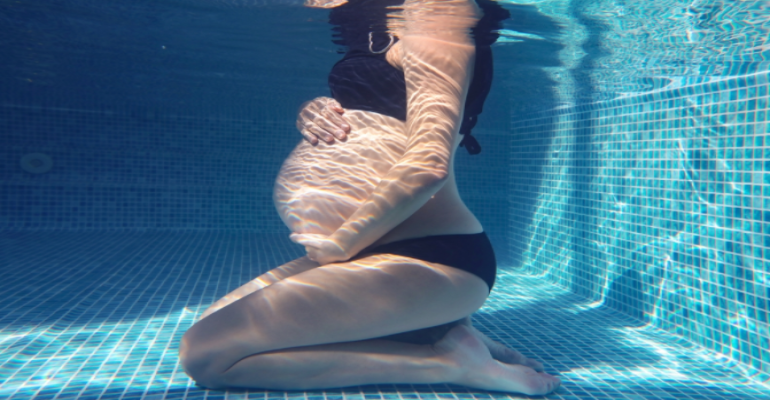
Water Birth
The birth process is a profound experience for every woman, both physically and emotionally. In recent years, approaches to childbirth have diversified, with increasing interest in more natural and intervention-free methods. One such method, water birth, has gained attention particularly for its ability to make labor pains more manageable and increase the mother's comfort. When proper conditions are provided, water birth is considered a safe option for both mother and baby (1).
Water birth is a holistic approach that aims to transform the birth process into a more controlled and secure experience, not only physically but also psychologically.
Water Birth
Water birth refers to the occurrence of active labor and, in some cases, the moment of the baby’s birth, in a specially designed pool filled with warm water. The buoyancy of the water and its relaxing effects help the mother’s muscles work more comfortably.
The main goal of this approach is to make the birth process a more natural, calm, and mother-centered experience.
History of Water Birth
Although the origins of water birth date back to ancient times, it was not systematically approached in modern medicine until the 20th century.
With the popularization of natural birth approaches, this method has been evaluated through scientific studies and proven to be safe under certain conditions (2).
How Does Water Birth Take Place?
The mother-to-be enters the water during the active phase of labor, and the birth process continues there. The water temperature is kept close to the body temperature.
This environment allows the mother to take different positions, which may facilitate the progress of labor.
Advantages of Water Birth for the Mother
Thanks to the muscle-relaxing effects of warm water, labor pains can become more tolerable. This supports the mother’s more active and controlled participation in the birth process.
- Reduced pain perception
- Increased mobility
- Decreased anxiety levels
- A more positive perception of the birth experience
Effects of Water Birth on the Baby
Transitioning from a liquid environment to another liquid environment is thought to reduce the birth stress for the baby.
However, these effects may not occur in the same way for every baby, and scientific data is limited (3).
Who is Water Birth Suitable For?
Water birth may be a suitable option for low-risk pregnancies where the mother-to-be is in good general health.
Who is Water Birth Not Suitable For?
- High-risk pregnancies
- Multiple pregnancies
- Presence of infection
- Signs of fetal distress
Possible Risks of Water Birth
Like any birth method, water birth carries some risks. These risks usually occur under inappropriate conditions.
Therefore, an experienced team and the right environmental conditions are critical (4).
Differences Between Water Birth and Normal Birth
The main difference is the environment in which the birth takes place. In water birth, the buoyant effects of the water are prominent.
For more detailed information on the natural flow of the birth process and intervention-free progress, it is recommended to evaluate it together with the natural birth approach.
Water Birth and Postpartum Process
The postpartum process is generally similar to that of a normal birth. The mother and baby are closely monitored.
Skin-to-skin contact and early breastfeeding are supported.
Psychological Aspects of Water Birth Experience
Water birth can help the mother feel more secure. This contributes to psychological adjustment after birth.
A less traumatic birth experience can support emotional well-being during the postpartum period (5). For better management of this process, mental preparation for childbirth methods can provide important support.
Scientific Approach to Water Birth
Scientific studies show that, when the right patient selection and proper conditions are met, water birth can be a safe alternative.
Preparation Process for Water Birth
Pre-birth education and accurate information are important for the healthy progression of this process. Mental preparation, as well as physical preparation, can contribute to a more controlled and positive perception of the birth experience.
Frequently Asked Questions
- ❓
Is water birth safe?
When proper patient selection is made, and with an experienced birth team and necessary medical equipment, water birth can be a safe option. However, it is not suitable for every pregnancy, and the decision should be made with expert evaluation.
- ❓
Does water birth eliminate pain completely?
No, water birth does not completely eliminate pain. However, the relaxing effects of warm water can make labor pains more manageable and help the mother experience the birth process more comfortably.
- ❓
Who is suitable for water birth?
Generally, it can be considered for low-risk, single, and uncomplicated pregnancies. The mother’s general health status and the baby’s position for birth are important factors.
- ❓
Is water birth suitable for every mother-to-be?
No. It may not be recommended for high-risk pregnancies, multiple pregnancies, infections, or cases where the baby’s status needs to be closely monitored. Therefore, the decision should be made on a case-by-case basis.
- ❓
What is the main difference between water birth and normal birth?
The main difference is the environment in which the birth takes place. In water birth, the buoyancy effects of water are the focal point.
- ❓
How to prepare for water birth?
Prenatal education, learning about the conditions of the birth center, assessing medical suitability, and mental preparation are important for a healthy water birth experience.
References
- World Health Organization (WHO) – Maternal Health
https://www.who.int/health-topics/maternal-health - American College of Obstetricians and Gynecologists (ACOG) – Labor and Delivery
https://www.acog.org/womens-health/faqs/labor-and-delivery - Cochrane Library – Immersion in water in labour and birth
https://www.cochranelibrary.com/cdsr/doi/10.1002/14651858.CD000111.pub4/full - American Psychological Association (APA) – Preparing for childbirth
https://www.apa.org/topics/pregnancy/childbirth - National Center for Biotechnology Information (NCBI) – Water birth and maternal/fetal outcomes
https://www.ncbi.nlm.nih.gov/