

 Deutsch
  Français
  Türkçe
  العربية
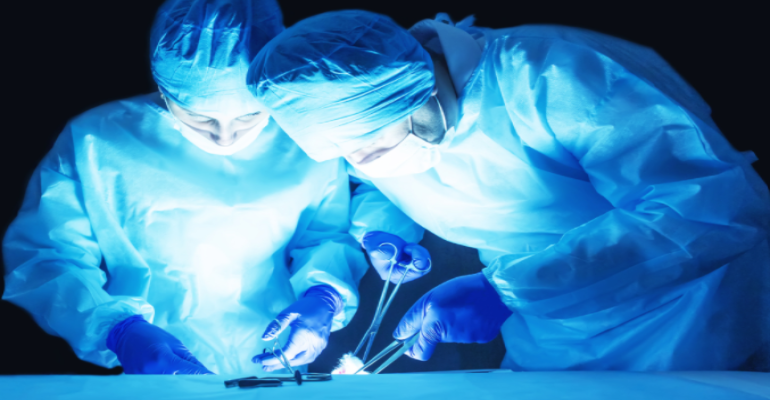
Fibroids are among the most common benign tumors of the uterus in women and are masses that develop from the muscular layer of the uterus. They are seen more frequently during the reproductive years and may cause different symptoms depending on their size, number, and location. However, not every fibroid causes symptoms, and not every fibroid requires surgery. The treatment plan is personalized based on the patient’s age, symptoms, the location and size of the fibroid, and future pregnancy plans [1][2].
Fibroids are usually benign. Since they can be influenced by hormones such as estrogen and progesterone, they may grow during reproductive years and certain stages of pregnancy, while they often tend to shrink after menopause. Genetic predisposition, family history, and hormonal factors may also play a role in the development of fibroids [2][3].
“”The most important point in fibroid treatment is that the same approach should not be applied to every patient. The type of fibroid, the patient’s symptoms, and future fertility plans directly affect the treatment decision.
How many types of fibroids are there?
Fibroids are classified according to their location within the uterus. The most common type is the intramural fibroid. These develop within the muscular wall of the uterus and can affect its structure as they grow [1][2].
Subserosal fibroids grow toward the outer surface of the uterus and may create a feeling of pressure on surrounding organs. Submucosal fibroids extend into the uterine cavity and are more closely associated with heavy menstrual bleeding, intermenstrual bleeding, and pregnancy-related problems [1][2][3]. Some fibroids may be pedunculated, meaning they are attached by a stalk [2].
What are the symptoms of fibroids?
Some fibroids are discovered incidentally without causing any symptoms. When symptoms are present, they usually vary depending on the size, number, and location of the fibroid [1][2]. The most common symptoms include:
- Heavy and prolonged menstrual bleeding
- Intermenstrual bleeding
- Pain or pressure in the pelvic, lower back, or abdominal area
- Frequent urination or difficulty fully emptying the bladder
- Constipation or a feeling of pressure in the bowels
- Pain during sexual intercourse
- Abdominal enlargement, bloating, or fullness
When is fibroid surgery necessary?
Surgery is not always the first option in fibroid treatment. Small fibroids that do not cause symptoms and do not create problems during follow-up can often be monitored without intervention [1][2]. However, in some cases, surgical treatment becomes necessary. Surgery may be considered in cases of severe menstrual bleeding, anemia, persistent pain, pressure on surrounding organs, suspicion of rapid growth, or when the fibroid’s location affects pregnancy plans [1][3][4].
For patients who wish to have children, myomectomy (removal of fibroids while preserving the uterus) is often preferred. The treatment decision should be based on the patient’s age, the number and location of fibroids, and fertility expectations [1][4].
What is fibroid surgery?
The surgical removal of fibroids is called a myomectomy [4]. Depending on the number, size, and location of the fibroids, the procedure can be performed using different techniques. Minimally invasive methods are preferred in suitable patients, while open surgery may be required in cases of large or multiple fibroids [1][4].
In laparoscopic (closed) fibroid surgery, small incisions are made in the abdomen, and the procedure is performed using a camera and surgical instruments. Advantages include smaller incisions, shorter hospital stays, and faster recovery. However, it is not accurate to say that there will be no scars; scars are usually smaller [4].
In some submucosal fibroids, a hysteroscopic approach through the cervix may be used. Open surgery is preferred in larger, multiple, or technically complex fibroids. In this method, an incision is made in the lower abdomen, and the surgeon removes the fibroids and repairs the uterine wall [1][4]. Recovery time varies depending on the type of surgery.
For more detailed information about fibroid treatment options and surgical processes, you can review our fibroid treatment page.
What should be considered after surgery?
After fibroid surgery, mild to moderate pain, fatigue, and short-term vaginal spotting may occur. The severity depends on the type of surgery performed [4]. Recovery time is generally shorter in minimally invasive procedures and longer in open surgeries [4].
- Medications prescribed by the doctor should be taken regularly.
- Light spotting is normal, but heavy bleeding requires medical attention.
- Discharge may occur the same day or within a few days depending on the procedure.
- Full recovery time varies based on the surgical method.
- Heavy lifting and strenuous activities should be avoided for a period.
- Return to sexual activity and pregnancy planning should follow medical advice.
For more detailed information about surgical methods, you can also review our open vs closed surgery page.
Frequently Asked Questions
- Does every fibroid require surgery?
No. Many fibroids can be monitored without surgery if they do not cause symptoms [1][2].
- Can fibroids turn into cancer?
Most fibroids are benign, but unusual growth or findings should be evaluated by a physician [1][3].
- Can fibroids affect pregnancy?
Some fibroids may affect fertility or pregnancy depending on their location [1][4].
- Is minimally invasive surgery suitable for everyone?
No. Suitability depends on the size, number, and location of the fibroids [4].
References
- ACOG. Uterine Fibroids. https://www.acog.org/womens-health/faqs/uterine-fibroids
- NHS. Fibroids. https://www.nhs.uk/conditions/fibroids/
- Mayo Clinic. Uterine fibroids. https://www.mayoclinic.org/diseases-conditions/uterine-fibroids/symptoms-causes/syc-20354288
- Mayo Clinic. Myomectomy. https://www.mayoclinic.org/tests-procedures/myomectomy/about/pac-20384710