

 Deutsch
  Français
  Türkçe
  العربية
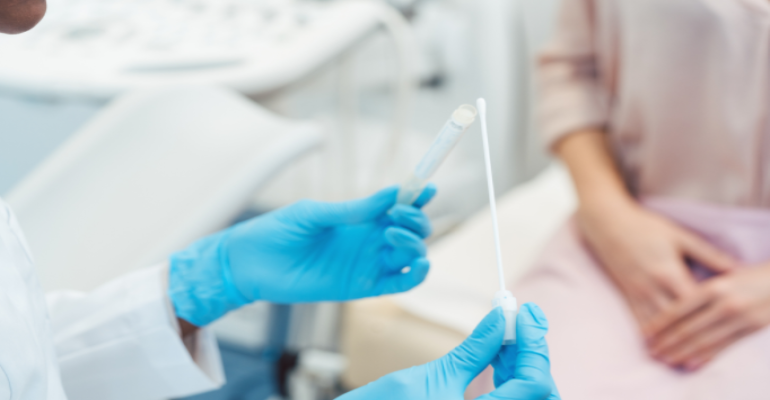
Painless and Pain-Free: Pap Smear Test
Many women have misconceptions about the smear test. This gynecological test, which is used to detect cancer risk in advance and identify cellular abnormalities, is often perceived as a painful procedure due to misinformation. However, the smear test is actually a painless procedure that takes approximately 30 seconds and is an extremely effective screening method for preventing cervical cancer [1].
“ ”The majority of cervical cancer cases occur in women who do not undergo regular screening. The smear test detects cancer before it develops, at a stage when it is still treatable.
What Is a Smear Test?
The smear test is a diagnostic method used to detect cellular abnormalities in the cervix, identify precancerous cells, diagnose infections, and screen for cervical cancer. It also plays an important role in the early detection of endometrial cancer. This test allows many conditions to be identified at an early stage before they develop into cancer.
This test detects precancerous or cancerous lesions at a stage when they are still treatable. In addition, it is also used to diagnose bacterial, protozoal, fungal, and viral infections (HPV). Nearly all cervical cancer cases are associated with high-risk HPV infection; HPV types 16 and 18 are responsible for approximately 70% of all cases [2].
When Is the Smear Test Performed?
According to the current guidelines of the American College of Obstetricians and Gynecologists (ACOG), the smear test is recommended as follows [1]:
- No screening is required before the age of 21.
- Women aged 21–29 should have a Pap (smear) test alone every 3 years.
- Women aged 30–65 should have a combined HPV test and Pap test (co-testing) every 5 years, or a Pap test alone every 3 years.
- After age 65, screening may be discontinued in women with consecutive negative results.
Primary HPV testing, when used alone, is considered more sensitive than the Pap test in detecting high-grade lesions [2].
For more detailed information about HPV infection and treatment, you can visit our HPV treatment page.
How Is the Smear Test Performed?
Contrary to common concerns, the smear test is not painful; it is a simple and quick procedure. After the patient is positioned on the examination table, the vaginal canal is opened using a device called a speculum. A sample is then collected from the transformation zone of the cervix using a small brush.
The sampling process takes approximately 5 to 10 seconds. The collected cells are examined under a microscope by a pathologist to detect cancerous or potentially cancerous changes. The entire procedure takes about 30 seconds.
What Should Be Considered Before the Test?
It is recommended that the test be performed after the menstrual period. Sexual intercourse should be avoided for approximately 48 hours before the procedure. To obtain the most accurate results, the vagina should not be cleaned internally, and no creams or medications should be applied beforehand [1]. Additionally, if there is a vaginal infection such as a fungal infection or lesions, it should be treated first before performing the test.
How Are Smear Test Results Evaluated?
If the smear test result is negative, it means no abnormal, precancerous, or cancerous cells were detected. If the result is positive, it indicates the presence of abnormal cervical cells. In such cases, infection treatment and close follow-up are recommended. Additional procedures such as colposcopy or biopsy may also be performed if necessary [1].
Does a Positive Result Mean Cancer?
A positive smear test result does not mean that the person has cancer. It indicates that there are cellular abnormalities that require further evaluation. A colposcopy may be performed for a more detailed examination of the cervix. Another advanced screening method is HPV typing, as certain HPV types—especially types 16 and 18—are associated with a higher risk of cancer [2].
If you meet the above criteria, you should undergo regular smear testing and consult a specialist gynecologist.
For more detailed information about cervical cancer, you can visit our cervical cancer page.
Frequently Asked Questions (FAQ)
- ❓
Is the smear test painful?
No. The smear test takes about 30 seconds and is painless. Some women may feel slight pressure, but it quickly subsides.
- ❓
At what age should I start the smear test?
According to ACOG guidelines, screening should begin at age 21.
- ❓
Is the smear test still necessary after HPV vaccination?
Yes. The HPV vaccine does not cover all HPV types, so regular screening should continue.
- ❓
What should I do if the result is positive?
A positive result does not mean cancer. Your doctor may recommend further tests such as colposcopy or HPV typing.
- ❓
Can the smear test be performed during menstruation?
No. Menstrual blood may affect the accuracy of the results, so it is recommended to perform the test after the period.
References
- American College of Obstetricians and Gynecologists (ACOG).
- Hall, M. T., et al.