

 Deutsch
  Français
  Türkçe
  العربية
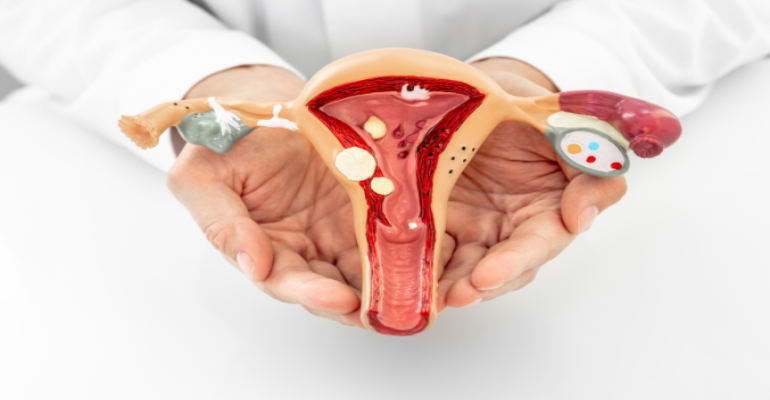
Uterine (Endometrial) Polyps
Intrauterine polyps are growths that develop in the inner lining of the uterus, known as the endometrium. They occur when endometrial tissue grows more than normal. Their size can range from a few millimeters to several centimeters. Although they are usually benign, they may cause fertility problems depending on their characteristics [1].
“ ”Intrauterine polyps are often asymptomatic; however, delays in diagnosis and treatment can lead to serious consequences, ranging from menstrual irregularities to infertility. Early diagnosis is always beneficial.
Who Is at Risk for Intrauterine Polyps?
Uterine polyps can be seen in women of all ages, but they are more commonly observed in women between the ages of 30 and 50. Conditions such as obesity, high blood pressure, and a history of breast cancer treatment increase the risk of developing intrauterine polyps [1]. Studies also show that obesity and advanced age are significantly associated with a higher risk of premalignant or malignant transformation [2].
What Causes Uterine Polyps?
The exact cause of uterine polyps is not fully understood. However, certain risk factors are known to contribute to their formation, particularly hormonal fluctuations [1].
What Are the Symptoms of Uterine Polyps?
Symptoms of uterine polyps include:
- Irregular menstrual cycles
- Heavy or prolonged menstrual bleeding
- Bleeding or spotting between periods
- Postmenopausal vaginal bleeding
- Infertility
The severity of symptoms may vary depending on the number and size of the polyps. One of the most common signs is menstrual irregularity.
In particular, prolonged or heavy menstrual bleeding is among the most frequently observed symptoms. Bleeding after sexual intercourse or postmenopausal bleeding are also common symptoms associated with intrauterine polyps [1].
To learn more about IVF treatment, you can visit our IVF treatment page.
How Are Endometrial Polyps Diagnosed?
To diagnose intrauterine polyps, it is important to consult an experienced gynecologist. According to current guidelines, transvaginal ultrasound (TVUS) is the first-line imaging method for detecting endometrial polyps. In cases where ultrasound is insufficient, saline infusion sonohysterography (SIS) can be used. Hysteroscopy-guided biopsy is considered the gold standard for diagnosis [3].
What Happens If Uterine Polyps Are Left Untreated?
Uterine polyps can vary in size and may occur as single or multiple growths. They can cause anemia due to irregular bleeding. Additionally, they may block sperm passage or interfere with embryo implantation, leading to infertility. Research indicates that endometrial polyps may negatively affect endometrial receptivity and reduce implantation rates, which is why pregnancy rates tend to improve after polypectomy [4]. Therefore, polyps should be treated under medical supervision.
How Are Endometrial Polyps Treated?
Hysteroscopy is one of the most effective methods for treating endometrial polyps. A thin camera is inserted into the uterus, allowing both diagnosis and treatment. Polyps are visualized, removed, and then sent for pathological examination to determine whether they are benign or malignant. Pathological evaluation is always necessary after polypectomy, as the risk of malignancy is reported to be around 3% [1].
If there are no complications after the procedure, the patient can usually be discharged on the same day. The operation typically takes about 30 minutes and is performed under sedation. Since polyps may recur, regular follow-up examinations are essential [3].
For more information about fibroid treatment, you can visit our fibroid treatment page.
Frequently Asked Questions (FAQ)
- ❓
Can uterine polyps go away on their own?
Some small polyps may regress spontaneously. Studies show that approximately 29% of polyps in premenopausal patients may disappear within one year. However, a wait-and-see approach is not recommended for symptomatic or fertility-related cases.
- ❓
Can uterine polyps turn into cancer?
Most polyps are benign. However, the risk of malignancy is reported to be around 3%. This risk increases with menopause, abnormal bleeding, obesity, and advanced age. Therefore, all removed polyps should be sent for pathological examination.
- ❓
Do uterine polyps affect fertility?
Yes, they can. Polyps may block sperm passage or negatively affect embryo implantation. Therefore, polypectomy is often recommended before IVF treatment in women undergoing fertility treatment.
- ❓
Is hysteroscopic polyp surgery painful?
Hysteroscopic polypectomy is usually performed under sedation or local anesthesia. The procedure takes about 30 minutes, and most patients are discharged on the same day. Today, it can also be performed as an “office hysteroscopy” without requiring an operating room.
- ❓
Can polyps recur?
Yes. Uterine polyps may recur, so regular follow-up with ultrasound is very important after treatment.
References
- Vitale, S. G., et al. (2021)
- Henry Wong, C. L., & So, P. L. (2021)
- Bougie, O., et al. (2024)
- Afifi, K., et al. (2017)