

 Deutsch
  Français
  Türkçe
  العربية
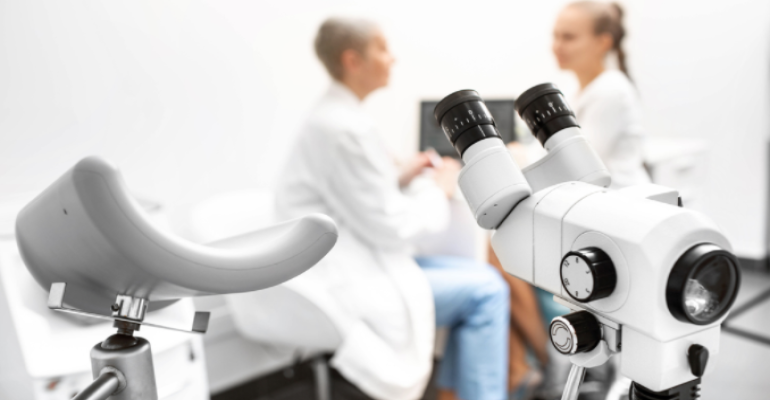
Colposcopy is a non-invasive technique that allows the physician to examine the cervix in detail. In this method, which magnifies the image 6 to 40 times, the cervix is visualized more clearly with a lighted device, enabling the detection of all abnormalities.
The colposcope is a lighted magnifying instrument, similar to binoculars. It allows detailed evaluation of the vaginal area. If a suspicious area is observed during colposcopy, a colposcopic biopsy can be performed in the same session to examine the relevant tissue [1].
“ ”Colposcopy is the most reliable method to closely examine the cervix after abnormal Pap smear or HPV results. This painless procedure, which takes 5–15 minutes, makes it possible to detect cancer before it develops.
In Which Cases Is Colposcopy Performed?
Colposcopy is particularly helpful in the early detection of cervical cancer, which often progresses without symptoms. According to the ACOG/ASCCP 2019 risk-based management guidelines, immediate referral to colposcopy is crucial in patients with abnormal Pap smear results or those who test positive for HPV 16 or HPV 18 [1]. Since cervical cancer develops slowly and silently, colposcopy plays a key role in early diagnosis.
The main indications for colposcopy include:
- Diagnosis of cervical cancer
- Evaluation of suspicious vulvar lesions
- Detection of visible precancerous changes in the vulva
- Assessment and monitoring of vulvar itching
- Precancerous changes in cervical tissue
- Additional evaluation in cases of unexplained infertility
For more detailed information about cervical cancer, you can visit our page what is cervical cancer and how is it treated?.
What Is the Preparation Process for Colposcopy?
- Colposcopy is a simple, painless, and almost risk-free procedure.
- It is not recommended during menstruation, as a clear view is required.
- Sexual abstinence is advised before the procedure, as recommended by the physician.
- Tampon use should be discontinued one or two days before the procedure.
- Vaginal medications should not be used during the preparation period.
- Vaginal douching should be avoided.
How Is Colposcopy Performed?
Colposcopy is performed under clinical conditions. The patient lies on her back, similar to a pelvic examination or Pap smear test. For better visualization, the cervix is cleaned with a special solution (acetic acid or Lugol’s iodine). This helps abnormal cells become more visible. The colposcope is positioned a few centimeters in front of the cervix. If a suspicious lesion is detected, a colposcopic biopsy can be performed [2].
How Long Does Colposcopy Take?
The duration of colposcopy depends on whether a biopsy is performed. Generally, the procedure is completed within 5–15 minutes. If a biopsy is taken, the duration may be slightly longer, but it remains a short and well-tolerated procedure.
Frequently Asked Questions (FAQ)
- ❓
Is colposcopy painful?
No. Colposcopy is painless and low-risk. If a biopsy is performed, a mild pressure or cramping sensation may occur, but it resolves quickly.
- ❓
Does every abnormal Pap smear require colposcopy?
No. The decision depends on the individual risk level, which is determined based on test results and screening history.
- ❓
Can colposcopy be performed during pregnancy?
Yes. Colposcopy can be safely performed during pregnancy when necessary.
- ❓
When are the results available?
If a biopsy is performed, pathology results are usually available within 1–2 weeks.
- ❓
Does HPV 16 or 18 positivity require colposcopy?
Yes. According to guidelines, direct referral to colposcopy is recommended in HPV 16 or HPV 18 positive cases due to their higher risk.
References
- ACOG.
- ASCCP.