

 Deutsch
  Français
  Türkçe
  العربية
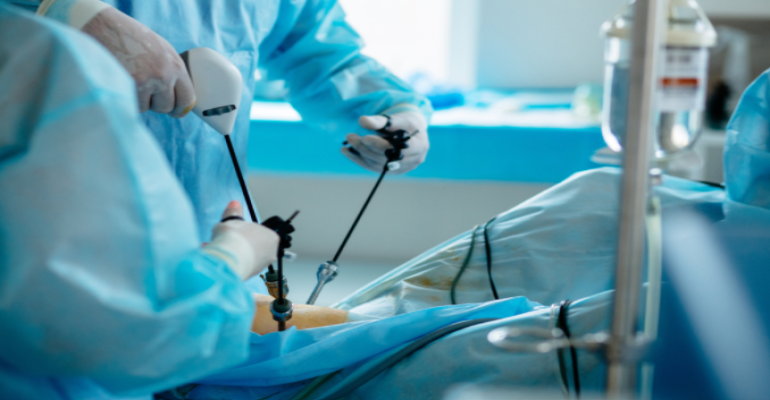
Laparoscopy, one of the most important advancements in modern surgery, is a minimally invasive surgical approach used in the diagnosis and treatment of many gynecological conditions. Commonly referred to as “closed surgery,” this method may offer advantages such as less pain, shorter hospital stays, and faster recovery in some patients due to smaller incisions [1][2][3]. However, the same approach may not be suitable for every patient or every surgical condition. Therefore, the decision to perform laparoscopy should be evaluated based on the type of disease and the patient’s overall condition [1][3].
Laparoscopy can be used for both diagnostic and therapeutic purposes. Especially in gynecology, it plays an important role in the evaluation of ovarian cysts, endometriosis, ectopic pregnancy, certain fibroids, and various causes of pelvic pain [1][2].
“ ”Laparoscopy is a surgical technique performed through small entry points instead of large incisions. This can allow a more comfortable recovery process for some patients.
What is laparoscopy?
Laparoscopy is a minimally invasive surgical procedure performed by accessing the abdominal or pelvic cavity through small incisions. During this procedure, a thin instrument called a laparoscope, which has a camera and light source at its tip, is used. Thanks to this camera, the surgeon can view internal organs in detail on a monitor and perform the necessary interventions [1][2][3].
Compared to open surgery, one of the most notable features of laparoscopy is that it involves smaller incisions. However, incision size may vary depending on the type of procedure and technique used. Therefore, laparoscopy should not be considered a single standardized method [1][3].
Why is laparoscopy performed?
Today, laparoscopy is used both for diagnosis and treatment. It can provide significant advantages, especially in gynecological conditions where imaging methods are insufficient or when surgical intervention is planned [1][2].
- Evaluation and removal of ovarian cysts
- Diagnosis and treatment of endometriosis
- Treatment of ectopic pregnancy
- Surgical treatment of certain fibroids
- Investigation of causes of pelvic pain
- Tissue sampling (biopsy)
- Performing certain hysterectomies and other gynecological surgeries
Some pelvic conditions can be evaluated with ultrasound, MRI, or CT scans. However, in certain cases, laparoscopy may be preferred to establish a definitive diagnosis or to perform treatment during the same procedure [1][3].
In which situations is laparoscopy used?
Laparoscopy may be considered for diagnostic or therapeutic purposes in the following situations:
- Infertility investigations
- Unexplained abdominal or groin pain
- Ovarian cysts
- Conditions related to pelvic inflammatory disease
- Suspected endometriosis
- Certain uterine and tubal diseases
- Evaluation or surgical planning in some gynecologic oncology cases
How is laparoscopy performed?
Laparoscopy is usually performed under general anesthesia [1][3]. Before surgery, factors such as fasting, medications, and blood thinners are evaluated individually. Therefore, preoperative preparation should be planned according to the patient [1].
During the procedure, a small incision is usually made near the navel. Carbon dioxide gas is introduced into the abdomen to create a working space, and the laparoscope is inserted [1][3]. If necessary, a few additional small incisions may be made for surgical instruments. The surgeon completes the planned procedure while viewing the images on a monitor [1][3].
The duration of the procedure varies depending on whether it is diagnostic or therapeutic and on the extent of the surgical intervention. In some cases, a laparoscopic procedure may be converted to open surgery for safety reasons [3].
What should be considered after laparoscopy?
After surgery, mild pain, abdominal tenderness, fatigue, and shoulder pain may occur. Shoulder pain is usually related to the gas used during the procedure and is generally temporary [1][2][3].
The type of sutures used and wound care may vary from patient to patient. Therefore, the doctor’s recommendations regarding incision care and showering should be followed carefully [1][2].
- Prescribed painkillers and medications should be taken regularly.
- Severe pain, fever, foul-smelling discharge, redness at the incision site, or excessive bleeding should be evaluated by a doctor.
- Return to daily activities depends on the extent of the procedure.
- Heavy lifting and strenuous activities should only be resumed with medical approval.
- Follow-up appointments should not be neglected.
For more detailed information about minimally invasive surgical methods used in diagnosis and treatment, you can review our endoscopic surgeries page.
Frequently Asked Questions
- Is laparoscopy an open surgery?
No. Laparoscopy is a minimally invasive surgical method performed with small incisions.
- Is laparoscopy used only for diagnosis?
No. It can be used for both diagnosis and treatment.
- Is shoulder pain normal after surgery?
Yes. It may occur due to the gas used during the procedure and is usually temporary.
- Is the recovery time the same for everyone?
No. It varies depending on the type of procedure and the patient’s overall health condition.
References
- ACOG. Laparoscopy. https://www.acog.org/womens-health/faqs/laparoscopy
- NHS. Laparoscopy (keyhole surgery). https://www.nhs.uk/tests-and-treatments/laparoscopy/
- Cleveland Clinic. Laparoscopy: What It Is, What To Expect & Recovery. https://my.clevelandclinic.org/health/procedures/4819-laparoscopy