

 Deutsch
  Français
  Türkçe
  العربية
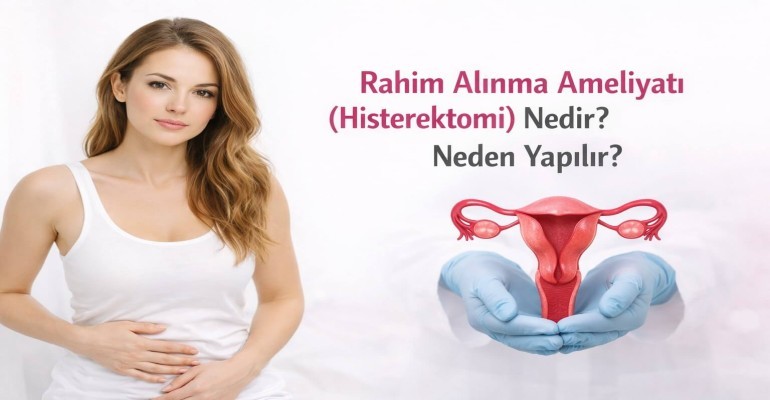
What is a hysterectomy (removal of the uterus)? Why is it performed?
The uterus removal surgery, also known as hysterectomy, is the surgical procedure in which the uterus (womb)—a key organ of the female reproductive system—is removed. This operation, which can offer a permanent solution in the treatment of conditions that significantly affect quality of life, requires a careful and thorough evaluation process.
Approaching women’s health not only through physical findings but with a multidimensional perspective that includes hormones, immunity, quality of life, and psychological well-being, Op. Dr. Serpil Kırım evaluates the decision for hysterectomy within this holistic framework.
What Is a Hysterectomy?
A hysterectomy is the complete or partial surgical removal of the uterus. With this operation, a woman’s reproductive capacity comes to an end. In some cases, the ovaries and fallopian tubes may also be removed.
In Which Cases May a Hysterectomy Be Necessary?
Removal of the uterus is not always the first-line treatment option. However, in certain conditions, it may be of vital importance:
1. Fibroids
These are benign tumors that develop in the uterus. Large fibroids that cause pain and heavy bleeding may require a hysterectomy.
2. Excessive Uterine Bleeding
In cases of recurrent, heavy bleeding that does not respond to medical treatment, removal of the uterus may be considered as a permanent solution.
3. Endometriosis
This condition occurs when endometrial tissue grows outside the uterus. In severe cases, a hysterectomy may be required.
4. Uterine Cancer and Cervical (Cervix) Cancer
In malignant conditions, surgery may be necessary to prevent the spread of cancer.
5. Adenomyosis
A condition in which the inner lining of the uterus embeds into the muscular layer, causing severe pain and bleeding.
6. Uterine Prolapse (Prolapsus Uteri)
This condition, commonly seen in older women or those who have had multiple deliveries, involves the uterus descending into the vagina. In severe cases, surgery becomes unavoidable.
Important Note:
“Surgical interventions such as hysterectomy should, of course, be performed when medically necessary, and when carried out with proper indications, these operations can be life-saving. However, it should not be forgotten that surgery only eliminates the existing problem; unless the underlying causes of the disease are addressed, similar problems may reappear in different forms within the body.
For example, although it is commonly believed that ‘fibroids will no longer develop’ after the uterus is removed due to fibroids, if underlying mechanisms such as hormonal imbalances, impaired intestinal function, or inadequate liver detoxification are not corrected, other conditions such as breast cystic formations, polyps, or different women’s health problems may develop.
Therefore, in all surgical procedures related to women’s health, it is of great importance not only to evaluate the necessity of the operation but also to investigate why the disease developed and simultaneously adopt a holistic approach aimed at eliminating these root causes.”
What Are the Types of Hysterectomy?
The method to be applied is determined by considering the patient’s age, overall health status, and the reason for surgery.
1. Total Hysterectomy
Both the uterus and the cervix are removed together. This is the most commonly performed method.
2. Subtotal (Supracervical) Hysterectomy
Only the body of the uterus is removed, while the cervix is left in place.
3. Radical Hysterectomy
The uterus, cervix, surrounding connective tissues, and the upper part of the vagina are removed. This method is generally used in cancer treatment.
Surgical Methods
- Open (Abdominal) Hysterectomy: An incision is made in the lower abdomen.
- Laparoscopic Hysterectomy: A minimally invasive technique that allows for faster recovery.
- Vaginal Hysterectomy: Surgery performed through the vagina, offering aesthetic advantages.
Op. Dr. Serpil Kırım makes decisions regarding the surgical method by considering the patient’s individual needs, hormonal balance, and quality of life. The postoperative process is also supported with a holistic treatment approach.
A Holistic Medicine Approach to Hysterectomy
Every woman has a different physiology, immune level, hormonal structure, and psychological dynamic. Therefore, the hysterectomy process should not be viewed solely as a surgical procedure.
Within Dr. Serpil Kırım’s holistic medicine approach, the following areas are evaluated before and after surgery:
- Hormone Tests and Supplementation
- Immune System Strengthening Programs
- Psychological Preparation and Support
- Phytotherapy (Herbal Support Therapy)
- Pelvic Floor Exercises and Physiotherapy
- Nutrition Plan and Vitamin–Mineral Support
Through all these steps, the patient adapts to the treatment process not only physically, but also mentally and hormonally balanced.
The Post-Hysterectomy Process
The postoperative period varies depending on the patient’s overall health status and the surgical method applied.
First Days:
- Mild pain and fatigue may occur.
- Walking and adequate fluid intake are encouraged.
1–2 Weeks:
- Normal daily activities gradually resume.
- Suture checks are performed.
4–6 Weeks:
- Full recovery is observed.
- Returning to sexual life is possible.
At the Serpil Kırım Clinic, we provide psychological support, nutrition recommendations to strengthen the immune system, and phytotherapeutic support during this period.
Hysterectomy Prices in Istanbul (2026)
The cost of hysterectomy surgery may vary depending on the type of surgery, hospital standards, materials used, length of hospital stay, and additional support programs.
|
Service Details |
Description |
Average Price (€) |
|
Consultation and Initial Assessment |
Gynecological evaluation |
Free of charge |
|
Laparoscopic Hysterectomy |
Minimally invasive method + 1-night stay |
€6,000 – €7,500 |
|
Vaginal Hysterectomy |
Aesthetic and functional approach |
€5,000 – €6,500 |
|
Open (Abdominal) Hysterectomy |
Conventional surgical method |
€3,500 – €4,800 |
|
Holistic Treatment Support Package |
Hormone tests, psychological support, phytotherapy |
€1,000 – €2,500 |
Final pricing is determined after evaluating the patient’s condition. Each patient is thoroughly informed before treatment begins.
A Deeper Approach to Women’s Health
For many women, the decision to undergo a hysterectomy is not only a physical but also an emotional and psychological process. In this journey, not only the surgery itself but also the overall integrity of the patient’s life should be taken into consideration.
Op. Dr. Serpil Kırım manages the treatment process with a holistic medical perspective, evaluating not just an organ, but the woman as a whole.