

 Deutsch
  Français
  Türkçe
  العربية
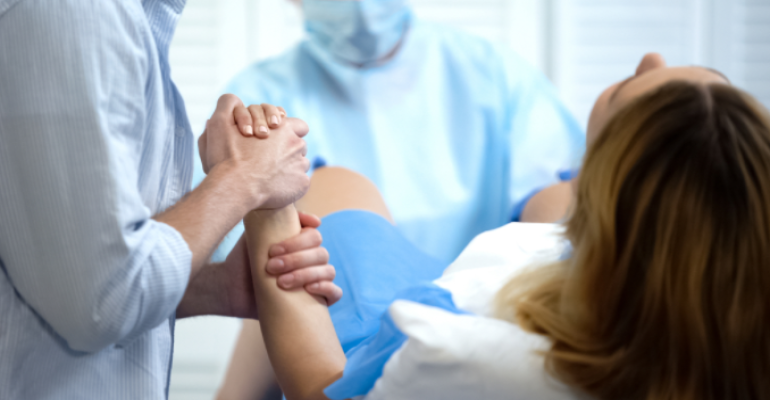
Natural Birth
Natural childbirth is a process that begins on its own as long as there are no medical obstacles. In natural birth, interventions are minimized as much as possible. The mother’s contractions start spontaneously. During the process, no medication or medical intervention is applied, and the baby is placed in the mother’s arms immediately after birth [1].
In natural childbirth, it is essential to have a specialized doctor and an experienced team. The doctor and the team create an ideal environment that supports natural birth and ensure that the mother is physically and psychologically well-prepared for delivery.
“ ”In natural childbirth, the mother’s body and the baby instinctively know how the process should progress. The ideal approach is to support this process while ensuring a setting where immediate intervention is possible if necessary.
During natural childbirth, interventions are kept to a minimum. The mother’s body and the baby instinctively know what to do during labor, working together as a perfect team.
Unnecessary interventions may disrupt this delicate balance. The ideal approach is to create an environment that supports the natural process while maintaining readiness for immediate medical action when needed.
Is There No Medical Intervention in Natural Birth?
The philosophy of natural childbirth does not completely exclude modern medical interventions. Natural birth takes place in an environment where medical intervention can be provided promptly if needed for the safety of the mother and the baby. The key principle is to perform routine medical monitoring while allowing natural birth whenever conditions are suitable.
Aiming for a birth without any monitoring or intervention is not recommended. When necessary, medical support helps ensure a safe delivery. Therefore, natural birth does not mean “no intervention,” but rather a birth with minimal intervention while prioritizing the health of both mother and baby [1].
What Are the Advantages of Natural Birth?
The greatest advantage of natural birth is that medical interventions are kept at the lowest possible level. Since medication use is minimal, it does not negatively affect the release of hormones that initiate and support labor.
In physiological birth — that is, birth without medication or intervention — the optimal functioning of the neuroendocrine system leads to the release of endogenous oxytocin and beneficial catecholamines. These hormones support effective contractions, increase endorphin levels, improve the newborn’s cardiopulmonary adaptation, facilitate thermoregulation, support breastfeeding, and strengthen mother–baby bonding [1].
In particular, beta-endorphin is a natural pain reliever released in response to labor pain and has a morphine-like effect. Often referred to as “nature’s narcotic,” this hormone reduces pain perception, alters consciousness, and creates a deep sense of euphoria and bonding for both the mother and the baby [2]. Synthetic oxytocin (Pitocin), however, cannot cross the blood–brain barrier and therefore does not trigger this endorphin release [2].
In a minimally medicated birth, the mother can fully experience the emotional intensity of childbirth. Since the baby is not affected by medications, it is more active and adaptive. The hormones released during birth are extremely beneficial for both the mother and the baby [1].
What Are the Core Principles of Natural Childbirth?
- Labor should begin spontaneously without induction.
- The mother should have freedom of movement and not be restricted to a fixed position.
- A supportive emotional and physical environment should be provided.
- Routine medical interventions should be avoided.
- The mother should be free to push in natural positions.
- Immediate skin-to-skin contact between mother and baby should be established after birth.
To prepare mentally and physically for childbirth, you can review our guide mental preparation for childbirth.
Frequently Asked Questions (FAQ)
- ❓
Is natural birth the same as normal birth?
Both refer to vaginal delivery, but natural birth emphasizes minimal intervention and supports the physiological process.
- ❓
Can pain relief never be used in natural birth?
The philosophy aims for minimal medication, but intervention is applied if medically necessary.
- ❓
Do birth hormones affect the baby?
Yes. Hormones like oxytocin and endorphins support both the mother and baby, improving adaptation after birth.
- ❓
Where should natural birth take place?
It can occur in a hospital, birth center, or at home — the important factor is having a safe environment and an experienced team.
- ❓
Is natural birth suitable for every woman?
No. In cases such as placenta previa, fetal distress, multiple pregnancy, or maternal health risks, medical intervention may be necessary. The decision should be made individually with medical guidance.
References
- Lothian, J. A., et al. (2013).
- Lothian, J. A. (2014).